
Croquet Craze: Swinging Into the Spotlight with a Classic Lawn Sport
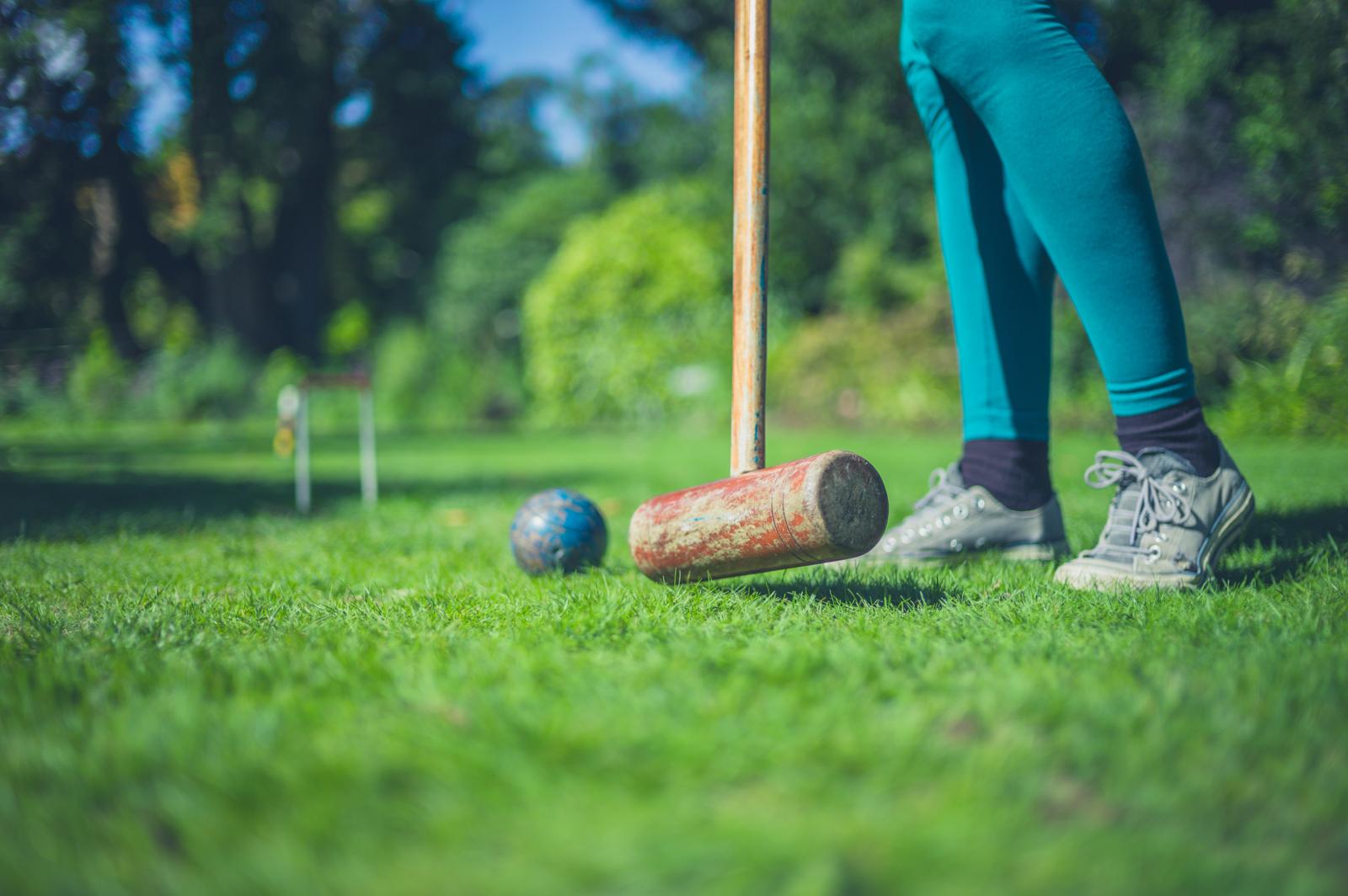
Croquet is a sport that conjures images of leisurely afternoons on manicured lawns, with players clad in whites, gently tapping colored balls through metal hoops with mallets. While the game does indeed offer a genteel way to enjoy the outdoors, it also harbors a rich history, a surprising depth of strategy, and variations that cater to both casual and serious players. This article dives into the world of croquet, exploring its origins, the basic rules and equipment of the game, the variations that exist, and the nuances that make croquet a beloved pastime for many.
Understanding Croquet
Croquet is a game that involves hitting plastic or wooden balls with a mallet through hoops, often called wickets in North America, that are embedded in a grass playing court. It is a game that can be enjoyed by people of all ages and skill levels. The objective is simple: players must navigate the course of hoops in the correct sequence and direction, which is usually laid out in a double-diamond pattern, culminating in hitting a final peg. However, the simplicity of this objective belies the tactical complexity that can arise during play.
The Origins of the Game
Although the precise origins of croquet are somewhat obscure, the game is believed to have developed in the British Isles in the early 19th century, possibly evolving from earlier games like pall-mall. It quickly became popular among the British upper class and soon spread to other parts of the British Empire, including North America and colonies in Africa. By the late 19th century, croquet was a fashionable pastime across England, with both men and women participating.
One of the game’s appeals was its accessibility. Unlike many other sports of the time, croquet could be played by people of varying physical abilities, and it did not require a vast space. It was also one of the first outdoor sports that women could play on an equal footing with men, contributing to its rapid spread in the social sphere of Victorian society.
Basic Rules and Equipment
To begin a game of croquet, players need a set of equipment that includes balls, mallets, hoops, and a peg. Traditionally, up to six balls are used, each a different color to correspond with a player or team. The mallets are used to strike the balls, and they come in various sizes to suit the player’s height and playing style. The hoops are made of metal and are firmly planted into the lawn in a predetermined pattern.
The basic rules involve players taking turns to strike their ball with the aim of passing through the hoops in the correct order and direction. Each time a player passes through a hoop, or ‘runs’ it, they earn another turn. If a player’s ball strikes another ball, called a ‘roquet,’ they earn two bonus shots. This can be used to the player’s advantage by positioning the struck ball in a favorable location or sending an opponent’s ball to a less advantageous position.
Players continue in this way until one player’s ball has passed through each hoop twice and struck the center peg, thus completing the course. This player or team is declared the winner.
Variations of the Game
Croquet has several variations that cater to different playing styles and levels of competitiveness. The most common forms of the game are Garden Croquet, Golf Croquet, and Association Croquet.
Garden Croquet is the most informal style of the game and is often played in backyards and parks. It is suitable for all ages and has simplified rules, making it a good starting point for beginners.
Golf Croquet, as the name suggests, is inspired by golf and is a faster-paced version where players take turns trying to hit their ball through the same hoop. This version is more interactive, as all players are focused on one hoop at a time, and strategic blocking of opponents can be crucial.
Association Croquet is the most complex and strategic form of the game, requiring precision and planning. It is played at a competitive level and includes additional rules such as ‘croquet shots,’ where after a roquet, the player places their ball in contact with the struck ball and can hit their own ball to make both balls move.
The Strategy of Croquet
While croquet may seem straightforward, it involves a level of strategic depth that can be quite engaging. Positioning is key; players must think several moves ahead, considering the layout of the hoops, the positions of the other balls, and the strengths and weaknesses of their opponents. Advanced players will use a combination of roquets, croquet shots, and strategic placements to navigate the course efficiently while hampering their opponents’ progress.
Good croquet strategy also involves knowing when to play defensively and when to take risks. Sometimes, the best move is to knock an opponent’s ball far from the current hoop or to position one’s ball in such a way that it blocks others from an easy shot.
In conclusion, croquet is a sport that blends physical skill with mental acuity, wrapped in a veneer of genteel competition. It is a game that can be as cutthroat or as casual as the players decide, and with its various formats, it remains adaptable to a wide audience. Whether played on a sunny afternoon as a light-hearted game or in a fiercely competitive tournament, croquet continues to offer a unique blend of strategy, skill, and outdoor enjoyment to all who take up the mallet.
