
Beach Volley Bonanza: Spike Your Way Through Summer!
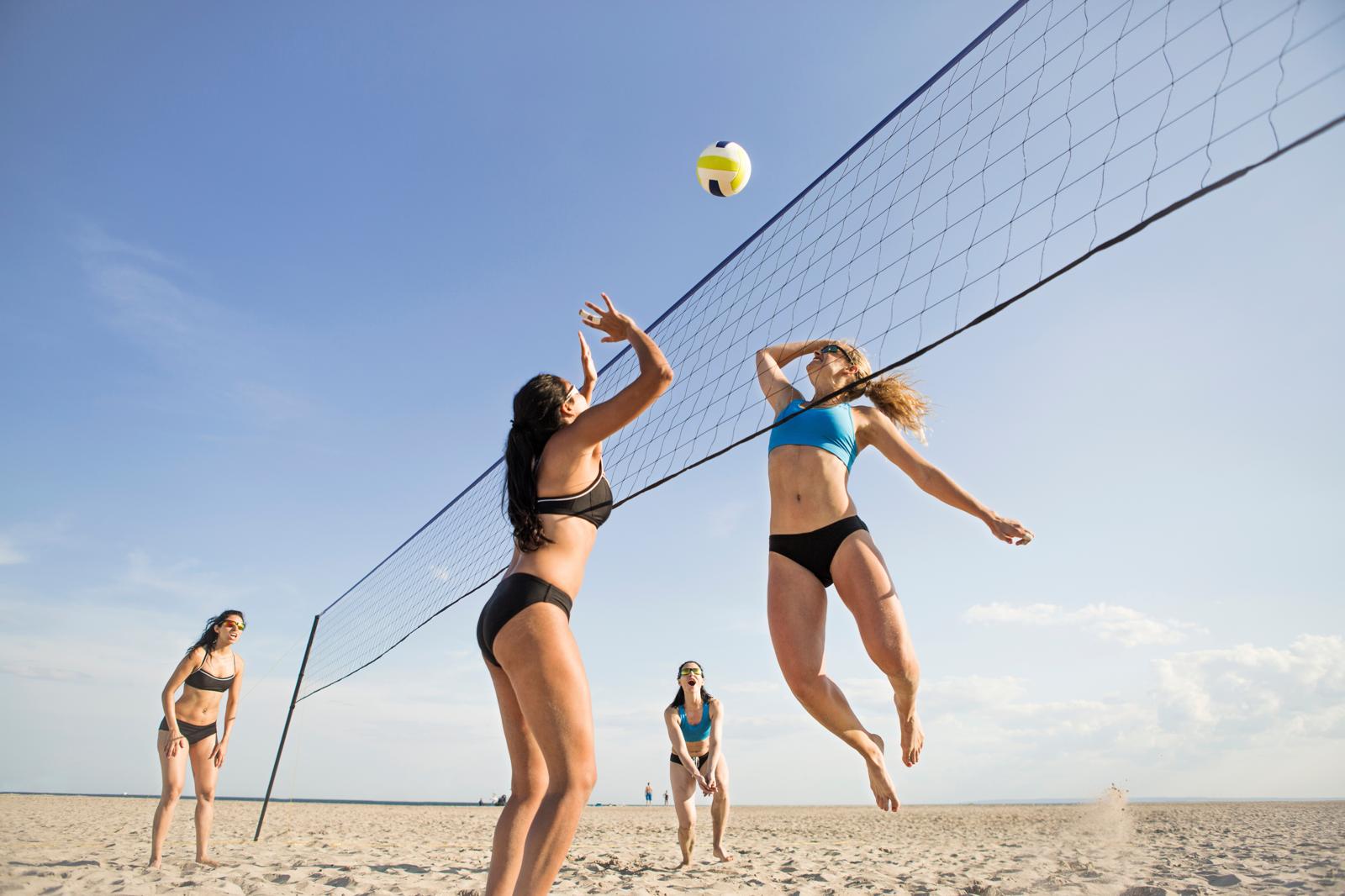
Beach volleyball is a sport that combines the sun-soaked shores with athletic prowess, strategy, and team spirit. Originating from the sandy beaches of California, it has swiftly evolved from an informal pastime to a renowned international competition, including its noteworthy inclusion in the Olympic Games. Lovers of sun, sand, and sports find beach volleyball to be the perfect amalgamation of recreation and intense competition. This article delves into the intriguing world of beach volleyball, offering insights into its rules, strategies, fitness benefits, and why it continues to spike in popularity around the globe.
Understanding the Basics of Beach Volleyball
Beach volleyball is typically played on a sand court with dimensions of 16×8 meters, divided into equal halves by a net. The sport involves two teams, with each team comprising two players, unlike indoor volleyball which features teams of six. One of the sport’s distinctive features is the lack of positional play, meaning players are not restricted to specific areas of the court and can move freely.
Each match is played in a best-of-three set format. The first two sets are played to 21 points, while a potential third set, often referred to as the tiebreaker, is played to 15 points. For a team to win a set, they must have a two-point advantage; hence, sets can sometimes extend beyond the regular point limit until this condition is met.
Another pivotal rule in beach volleyball is the hand-contact regulation. The ball must be hit with a quick contact, as opposed to being caught or thrown, which is a common error made by beginners. This rule ensures that the game maintains its fast-paced nature and requires a high level of ball control from the players.
Strategies on the Sand
In beach volleyball, strategy is as significant as physical skill. The absence of additional team members, as found in indoor volleyball, demands that players be adept at all aspects of the game. Teams often employ a variety of tactics based on their observations of their opponents’ weaknesses and strengths.
One such strategy is the use of different serving techniques to disrupt the opposing team’s formation. The float serve, which is harder to predict and return due to its lack of spin, and the jump serve, a powerful and aggressive serve, are popular methods to gain an advantage.
Defensively, players must master the art of “reading” the game, anticipating the opponents’ moves, and positioning themselves effectively to make saves. Offensively, successful teams often have a strong repertoire of spikes and shots, using the cut shot or line shot to exploit gaps in the opponent’s defense.
The Importance of Fitness and Conditioning
Beach volleyball is not only about the strategies and rules but also about the athleticism of the players. Playing on sand requires more energy and engages different muscle groups compared to playing on a hard surface. The instability of the sand makes jumping, sprinting, and changing direction more challenging, thus players must have exceptional balance and lower-body strength.
Conditioning for beach volleyball includes a mix of cardiovascular exercise for endurance, strength training for power, and plyometrics for explosiveness. Core stability exercises are also vital, as a strong core is essential for maintaining balance and generating power during play.
Moreover, due to the outdoor setting, beach volleyball players must be able to perform under varying weather conditions. Training typically involves acclimatization to the sun and wind, which can have a significant impact on gameplay, affecting visibility and the trajectory of the ball.
Why Beach Volleyball Continues to Soar
The appeal of beach volleyball lies in its unique blend of competitive sport and the leisurely beach atmosphere. It is a spectator-friendly game, often associated with a festive environment, making it a popular feature in beach resorts and recreational areas.
Its accessibility is another reason for its growing popularity. With minimal equipment required—a ball, a net, and a sandy surface—beach volleyball is a sport that can be enjoyed by people of all ages and skill levels. Whether played casually on a local beach or on a professional court, the game offers a sense of inclusivity and community.
Furthermore, beach volleyball has a global following, with international competitions such as the FIVB Beach Volleyball World Championships and the Olympic Games attracting large audiences. The sport’s Olympic inclusion has significantly boosted its profile and inspired many to take up beach volleyball, whether for leisure or as a competitive pursuit.
In conclusion, beach volleyball is an exciting and dynamic sport that captivates players and spectators alike. With its simple yet challenging gameplay, emphasis on fitness, and inviting social aspect, it’s no surprise that beach volleyball continues to serve as an inspiration for those seeking a spirited and engaging outdoor activity. Whether on a professional level or as a weekend pastime with friends, beach volleyball is a sport that promises exhilaration, fitness benefits, and the joy of competition.
