
Parkour Prowess: Unleashing Urban Adventure Through Free Running
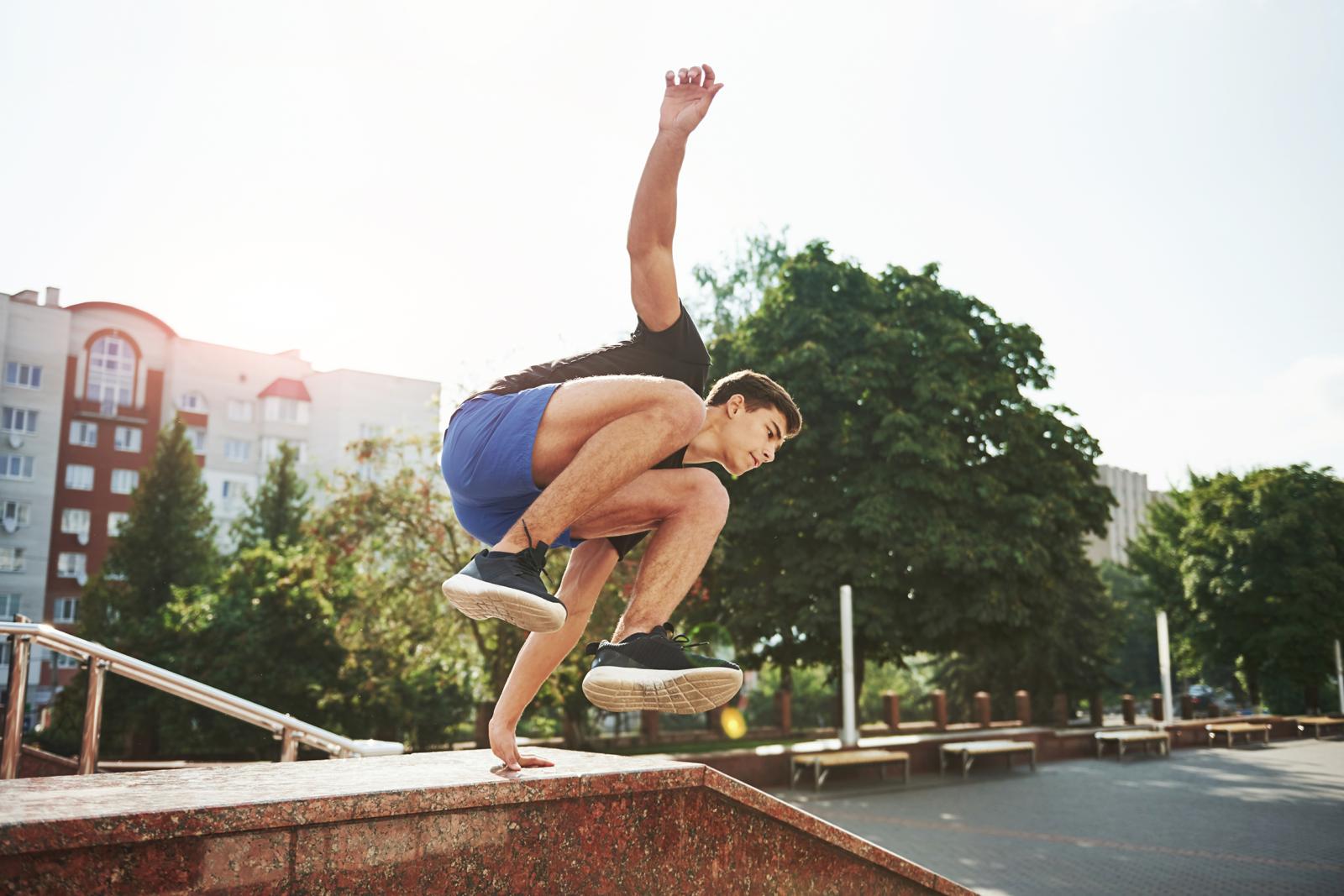
Parkour is an athletic discipline that has captured the imagination of people around the world. It involves moving rapidly through an area, typically an urban environment, negotiating obstacles by running, jumping, and climbing. Participants, known as traceurs (male) or traceuses (female), aim to get from one point to another in the most efficient way possible. This dynamic and visually captivating activity borrows elements from various disciplines such as gymnastics, martial arts, and even influences from military obstacle course training. It’s not just a physical challenge but also a philosophical one, as practitioners often talk about overcoming not just physical barriers, but also mental ones.
Understanding Parkour
To truly understand parkour, it is essential to delve into its core principles. At its heart, parkour is about self-improvement and the freedom of movement. Traceurs learn to look at the environment in a new way, seeing opportunities for movement where others see barriers. The philosophy behind parkour is often summarized by the French phrase “être et durer,” which translates to “to be and to last.” This highlights the importance of sustainability in practice – moving in a way that is kind to the body and can be sustained over a lifetime.
The practice of parkour is about more than just thrill-seeking; it’s a discipline that involves rigorous training and a deep understanding of one’s own physical and mental capabilities. This involves a gradual progression from simple movements to more complex and demanding challenges. The focus is on control, precision, and fluidity of movement. Safety is paramount, and experienced practitioners spend a considerable amount of time conditioning their bodies and learning how to fall safely to minimize the risk of injury.
Essential Parkour Movements
Parkour consists of a variety of movements, each with its own purpose and technique. The most fundamental is the “parkour roll,” a technique for landing and rolling that dissipates the impact of a jump over the shoulder and across the back, rather than directly down onto the legs. This movement is critical for preventing injuries and is one of the first things taught to beginners.
Other basic movements include the “precision jump,” which involves leaping from one object to another with accuracy; the “wall run,” where practitioners run up a vertical surface to reach a higher ledge; and the “cat leap,” where a traceur jumps and catches a ledge with their hands while their feet hit the wall below it.
More advanced techniques include the “kong vault,” where one dives over an obstacle and pushes off with their hands, and the “tic-tac,” a move that uses a wall for a boost to reach higher or farther ledges. The key to all these movements is to maintain momentum and flow – the smoother the movement, the more efficient and effective it is.
Training for Parkour
Training for parkour is a unique process that combines strength, endurance, balance, and flexibility. A traceur must develop a strong core and upper body to control movements and support their weight during vaults and climbs. Leg strength and power are also vital for explosive jumps and soft landings.
However, physical conditioning is only one aspect of parkour training. Just as important is the mental component, which includes spatial awareness, creativity, and the ability to assess risks accurately. Traceurs must be able to visualize their movements before executing them and to adapt quickly to changes in their environment or unexpected obstacles.
Training often begins in a controlled setting, such as a gym with mats and specially designed obstacles, before progressing to outdoor environments. This allows beginners to learn the basics and build confidence in a safe space. As traceurs become more experienced, they can move on to training in various urban and natural environments, challenging themselves with different textures, heights, and complexity of obstacles.
Parkour and Community
One often overlooked aspect of parkour is its community spirit. Despite being a highly individualistic pursuit, parkour has a strong culture of sharing knowledge, encouragement, and mutual respect. This stems from the origins of parkour in France, where the founders placed a strong emphasis on helping each other improve and overcome challenges.
Today, parkour communities can be found around the world, with practitioners coming together to train, share techniques, and participate in jams – informal gatherings where traceurs meet to practice and learn from one another. These communities are typically open and welcoming to newcomers, reflecting the inclusive nature of the discipline.
Moreover, parkour has given rise to a number of social initiatives, where experienced practitioners teach young people discipline, confidence, and respect through movement. These programs often focus on underserved communities, using parkour as a tool for social engagement and personal development.
In conclusion, parkour is more than just an extreme sport or urban acrobatics; it’s a discipline that combines physical prowess with mental fortitude. It encourages a unique way of interacting with the world and fosters a supportive community. Whether as a form of expression, a method of fitness, or a path to personal growth, parkour has the power to transform how individuals move through life, teaching them to navigate the obstacles they encounter with grace and resilience.
